Tuesday, March 26, 2013

Peter Hughes: Criticisms of maths skills don't add up


I have no doubt that many of you have been following the ‘maths’ stories inside the Herald over the last few weeks. Peter Hughes raises some interesting issues to contemplate. If you are interested in exploring some of these ideas an interesting read is ‘Catching Up or Leading the way: American Education in the Age of Globalisation’ by Professor Yong Zhao. This is a most interesting read. Yong Zhao was born and raised in China and is now a distinguished professor in America. He has a focus on the future and how we might best prepare children to be global citizens…..

While poor in some areas, NZ kids' results rank highly in international report evaluating real-world relevance.
Peter Hughes is a lecturer in maths education at the University of Auckland. He is co-author of 51 maths textbooks published in New Zealand, the US, Australia, and the UK.

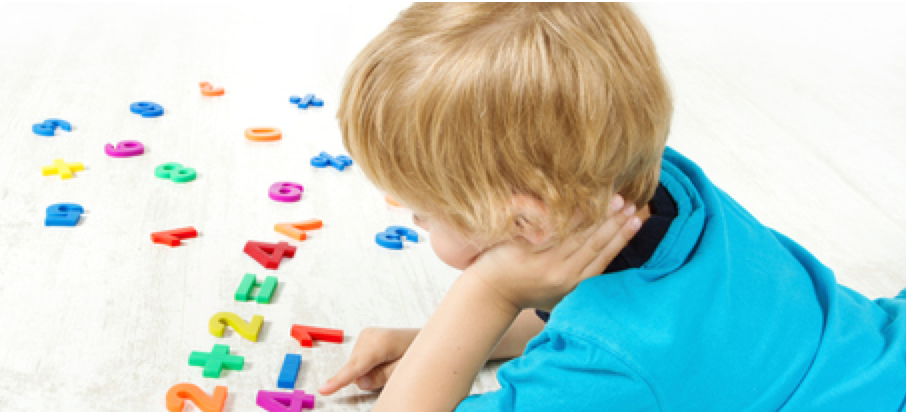
Recent debates about learning the basic facts and the ability of our Year 9s in basic subtraction was kicked off in the media by New Zealand's results in Timss (Trends in Mathematics and Science Study) that showed we were doing poorly in maths.
In fact very different interpretations are possible if data from Pisa (Programme for International Student Assessment) 2009 is used.
The 2010/11 government report on Pirls (Progress in International Reading Literacy Study) and Timss show that in reading our Year 5s come 23rd out of 45 countries. In science Timss places our Year 9s at 31st out of 49. For mathematics the media reported that Timss places our Year 9 students 34th out of 53. In fact this is the Year 5 result. The correct figure for Year 9 is 16th out of 42. This misreporting has had an important negative effect on the debate about mathematics learning. It has opened the door to a flood of criticism in the press and talkback radio about learning the tables and doing standard pen and paper calculations. Yet the Timss report for Year 9 does not mention these things: "New Zealand's Year 9 tended to be very strong in data and chance (ie statistics and probability) and to a lesser extent number compared to their overall performance.
Practice, practice, practice is an invitation to extinguish creative and lateral thinking. Photo / Getty Images
 They were very weak in algebra and to a lesser extent geometry." It points to alarming weaknesses in algebra and geometry; we urgently need to work on these areas rather than number.
All these results are very depressing. Yet are they correct? Pisa suggests they may not be: according to Pisa our 15-year-olds are near the top of the world in all three subjects. Out of 65 countries, New Zealand ranks seventh in reading, 13th in maths, and seventh in science.
The countries that are ahead of us in Pisa when reading, maths, and science position are combined are China (Shanghai) first, Hong Kong second, Finland and Singapore third equal, Korea fifth, Japan sixth, and Canada seventh. And we come in at eighth in the world. This data will be used later. So how can Timss and Pisa produce such wildly contradictory results for New Zealand?
The student assessments are constructed from quite different perspectives. In essence, Timss starts with the curriculum and assesses how well the students are achieving, whereas Pisa starts from the opposite end and asks how well students can utilise their mathematics in the real world. While it would be unfair to say which of the two we should prefer - and there is a lot of research on this that highlights the major difficulties in making such judgments - we might well choose Pisa because of its links to real world problems.
George Lim in his opinion piece on March 20 explains why children in the highly ranked Asian countries do so well in school maths - quite simply they do lots of practice. Does this suggest a way forward for New Zealand in the teaching of maths? Evidence from the United States is useful in answering this question.
In both Timss and Pisa the US always rates poorly, and every time a new report comes along their politicians react hysterically. Voucher schemes, merit pay for teachers, and charter schools are among the tired old non-solutions they resurrect to solve the problem. Yet, as an American colleague has repeatedly pointed out, if the US education system is so bad, how do they dominate the world in such things as university rankings and number of Nobel Prizes awarded?
Comparing the US with the five Asian countries above on these two criteria we get some interesting results. Of the top 40 universities in the world 25 are in America, China has none, Japan one, Hong Kong one, Korea none, and Singapore one. Looking at Nobel Prize winners since 2000, the US has 64 (or 84 if the 21 born outside the US are counted), China has four, Japan 11, Hong Kong one, Korea one, and Singapore none. Readers can draw their own conclusions from this data, but I for one cannot infer that New Zealand should imitate the Asian countries' relentless emphasis on practice in learning maths. Until there is any evidence to the contrary the best assumption is that "practice, practice, practice", as George Lim puts it, is an invitation to extinguish creative and lateral thinking in maths, things which our best students currently are rather good at.

Friday, March 15, 2013

Early childhood education campaign begins


This item has just been listed by NZ Newswire. Judith Nowotarski is the new President of the NZEI. She is the first President to have a background in early childhood education!
Judith Nowotarski - National President NZEI Te Riu Roa

One of New Zealand's biggest education unions is launching a five-year campaign aimed at improving early childhood education (ECE) in the country.

Cuts to funding are eroding the quality of ECE services and the union wants the government to commit more money to ECE in the next budget, NZEI national president Judith Nowotarski says.

"It is a great cause for concern that earlier gains such as a goal of having 100 per cent qualified teachers in ECE centres have been dropped and centre sizes have been allowed to balloon out to 150 children," she said.
"Quality ECE is crucial for all children but is particularly important for those children who come from low socio-economic backgrounds."

The government cuts were short-sighted because for every dollar invested in ECE $17 was saved in welfare and justice system costs in later life, she said.

The union believed the increasing cost of ECE on families was responsible for growth in enrolments slowing, Ms Nowotarski said.

NZEI is launching its Every Child Deserves the Best Start campaign a the Carter Observatory in Wellington on Sunday, which is Children's Day, with a free planetarium show, sausage sizzle and activities for kids.

Sunday, March 3, 2013

Bathing the baby


We were recently at a retreat with all, just about, the facilitator from ELP coming together.  While there Jo shared this amazing youtube video with us.  I think this is something everyone would be interested in seeing.
click to link to the video
The gentleness, the calmness, the amazing intuitiveness of the practitioner are amazing and of course the babies are delightful.  Under 2's care is so specialised and foundation building - the more we as teachers slow down to the pace of the child the more delight and joy for everyone involved.  Imagine if nappy change times were this calm, responsive and caring as depicted in the video.  Those using key teaching strategies will understand the importance of those wonderful care moments that are unhurried.
Enough words from me the video is waiting.....


Tuesday, February 26, 2013

THE RACE TO NOWHERE


I was fortunate to attend the ICOT13 conference in Wellington recently.  This was a fascinating 5 day conference to expand global thinking around the themes of ‘future survival‘, ‘personal futures‘ and ‘future society‘. During the conference I attended a workshop presented by Ron Ritchhart on 'Enlisting Parents as Allies: Working Together to Develop Powerful Thinkers and Learners.'  As many of the teams I work with find it challenging to engage and enlist parents, this workshop seemed like an excellent choice and I wasn't disappointed.  


Ron spoke of creating  'Culture's of Thinking, creating place where thinking is valued, visible and actively promoted.'  With parents focus often being on their child 'being school ready', how do we as teachers broaden their view so that they think about "what do we want children to be like as adults?"  We need them to know that this is about thinking about all children not their specific child, all children in our community. He said that when he has asked parents this they tend to come up with a huge list of dispositions, not skills and knowledge.  

He also shared how parents often worry that when you focus on dispositions that something is missing out, left behind, but we need to share that we are not leaving anything behind, we are lifting the bar!  We need to find ways for parents to understand that dispositions can't be directly taught, they are learnt over time, children grow into the intellectual life around them, so they need to ask themselves "what life are we surrounding children with?"

How do we talk to parents?  How do you structure the talk to them?  Ron suggested that we make links to a research base, as it gives parents ideas of where these ideas come from enabling them to investigate it further if they want to.  That we need to provide a rational for change from the status quo.  We also need to help connect parents to familiar experiences or context to get parents to see where education is going, share that we are lifting the bar!  Unpack the core practices with rich examples and get parents to engage in conversations, don't talk too long before you engage them in discussion!  Finally he suggested that we need to provide specific things parents can do and actions they can take at home.  Talk with parents about working TOGETHER.  How together, we can develop powerful thinkers and learners.  It's taking it further than just saying “this is what we do here”, it also saying “here is what you too can do at home.”

I'll leave you with four shifts on the way we educate to actively promote thinking that Ron shared...

1, Shifting instruction from the delivery of content to engagement.
2, Shifting the focus of curriculum from skills and knowledge to develop understanding.
3, Shifting the approach to curriculum from superficial coverage to depth of exploration.
4, Shifting the process of learning from memorisation to thinking.
These are the shifts for parents to look out for as a setting is on this journey, when all are happening then their setting as managed the change!

Watch the video clip from the link below about the Race to Nowhere, it's a good clip to share with parents to get THEM thinking! 

http://www.racetonowhere.com/thanks#prettyPhoto/0/

Arohanui 
Gillian

Monday, February 25, 2013

NEW... ELP LEADERSHIP RESEARCH GROUP

-->
From left to right: Karen Ramsey, Carol Hartley, Marianne McPherson, Margaret Carr, Fran Paniora, Julie Killick, Wendy Lee & Naomi Dick
Recently we established a new project which consists of  an ELP Leadership Research Group. 
The project aims to develop knowledge and research capacity within the early childhood community. The Research Group will be part of our building more sustainable communities as well as strengthening the research leadership within the early childhood community. Sadly, we have only limited funds for this project so are only able to invite six settings to be a part of this project at this stage.
The key research group will have three full days to work with Professor Margaret Carr and Wendy Lee. The project is affiliated to the University of Waikato Early Years Research Centre. We want to provide and enhance opportunities for teachers to build their research capacity, through not only engaging in research but also having the opportunity to work with other researchers with a variety of levels of experience.  We are of course particularly excited that Margaret is able to fully participate in this project.

Tuesday, February 12, 2013

'un-Googleable' questions that open up learning-rich tangents!

Along with more than one thousand other people, I recently attended the International Conference on Thinking. As soon as I heard this title I was excited. It seems to me, brave, vigorous thinking is the beating heart that nurtures wise learning and teaching cultures into resilient, communities of learners, where everyone has opportunities to build their skills, knowledge and dispositions. 

Of the many interesting people I listened to, Ewan McIntosh stood out for me because he connects imagination, problems and learners together. I liked him for the way he made everybody matter. Most of the people attending were school teachers, yet it took only a little twist to see the relevance for our very young children in early childhood. 

I went to his keynote address and two other workshops because I wanted to hear more about the practicalities of creating learning environments where all children could succeed. As an example he talked about children at Rosendale (Brixton, London). The teachers there wanted to explore:  ‘How might we better tell the story of learning for every single child in school?’ Through this process their children have been encouraged to become ‘problem finders’. In a usual project approach, teachers are the ones who come up with a topic to research. In Rosendale, it is the children and the learning that results is exceptional.  I can’t do this justice here and so I would encourage you to check out this web article. You can also see Ewan in action in this video.  

As I thought about all the exciting, innovative ways of engaging children in schools, it sounded a lot like what we do in early childhood when we are driven by Te Whāriki principles. When children have great resources, environments that generate curiosity to fire passion, children see real work in real time and they have the freedom to play around with ideas PLUS detailed feedback opportunities about their progress THEN great learning happens. Often this interest generates more questions than answers and draws children into growing their ideas together. Teachers can be left wondering about their role and a good yard stick to measure how effective we are is to ask ourselves a few questions:
  • Have I hijacked the children’s ideas (even with the best intentions)? 
  • Have I asked questions that I know the answer to? 
  • Are the questions we’re working on ‘googleable’? Ewan talked about ‘un-Googleable’ questions that open up learning-rich tangents. 
  • Am I trying to squeeze all this learning into fragments? 
  • When do I really think the real learning happens? 
Wise teachers working collaboratively with children are more centred on being learners themselves.   Ewan says: “Teaching needs learning, not the other way around”.

  This is the reaction to one young lad at the end of a TED style talk given by the Rosendale children. Real speeches, for a real audience about ‘unGoogleable questions’. Ewan muses: Wouldn't it be wonderful if this kind of reaction to learning happened all the time?”
A favourite quote of Ewan’s from Leonard Bernstein.


Monday, February 11, 2013

Cultural Leadership

At the ICOT13 - the Thinking Conference, recently held in Wellington, I was privileged to listen to Deanne Thomas and Wharehoka Wano talk about Cultural Leadership - Ko te kai o the rangatira he kōrero.


The focus of their workshop was for them to reflect on the leaders who had made a difference to them in their lives, whanau members, teachers, people in the community. They discussed  the many aspects of leadership and the most  important factor, of how your leadership relates to the care and wellbeing of people.

We are all rangatira, we gain strength from our roots, where we come from, the place we hold dear and we need to think of others and the important people in our lives.

Believe in your ideals, be staunch, listen to your instincts, be intuitive and be clear in your messages to others.

Be loyal to family and community.

Ko te kai a te rangatira, he kōrero -talk is the food of chiefs but is also about respect for others and consensus.

Ko te tohu o te rangitira, he manaaki - how do we nurture the children in our care, spiritually and in other ways and how do we sustain other people in our daily life?


He aha te mea nui?
He tangata.
He tangata.
He tangata.

What is the most important thing?  It is people, it is people, it is people.