Showing posts with label Engaging parents. Show all posts

Thursday, August 27, 2020

Sir Ken Robinson was a beacon of hope for all who believe in the power of playful education


The death of Sir Ken Robinson on 21st August 2020 was a devasting loss to the global education community. He was an extraordinary educationalist whose commitment and passion for being responsive to each child, and for recognising what he called ‘their element’, was so in tune with our own Early Childhood Education curriculum, Te Whāriki. He encouraged all of us to be attuned to the child, their spirit, and their passion.  Sir Ken Robinson, like those who developed Te Whāriki, had a vision of what education should look like. He challenged so much of the educational past that many of us have experienced. His work was and is transformational for both teachers, children and families alike.


He drove an educational revolution that challenged the industrial models of education that are still pervasive across our educational systems: the models that do not put children at the heart of education but rather systematize  everything in the interests of accountability rather than education. It is the standardization of outcomes, testing, and goals that move teachers away from the heart of teaching, stifling the critical notions such as the importance of being in relationship with children.


His talk  ‘Do schools kill creativity’, is he most watched TED talk of all time. It has had more than 66 million views….. what follows is a little excerpt from this talk…


“Our education system is predicated on the idea of academic ability. And there's a reason. Around the world, there were no public systems of education, really, before the 19th century. They all came into being to meet the needs of industrialism. So the hierarchy is rooted on two ideas.


Number one, that the most useful subjects for work are at the top. So you were probably steered benignly away from things at school when you were a kid, things you liked, on the grounds you would never get a job doing that. Is that right? "Don't do music, you're not going to be a musician; don't do art, you won't be an artist." Benign advice -- now, profoundly mistaken. The whole world is engulfed in a revolution.


And the second is academic ability, which has really come to dominate our view of intelligence, because the universities design the system in their image. If you think of it, the whole system of public education around the world is a protracted process of university entrance. And the consequence is that many highly talented, brilliant, creative people think they’re not, because the thing they were good at at school wasn’t valued, or was actually stigmatized. And I think we can’t afford to go on that way.”


For those who have not read the work of Sir Ken Robinson, now is the time to explore this work. Here is a list of this books… You will not regret picking up these books:The Element; Out of our Minds; Creative Schools and You, Your Child, and School.


There are also many opportunities to listen to Sir Ken Robinson … a google of his name will bring up over 16 million links…. Start with his TED talks...

Sir Ken Robinson died on the 21st August surrounding by his family after a short battle with cancer. For many of us, we were shocked to learn of his death. I know he has inspired me through his deep commitment to children across the globe, delivering his powerful messages with such an uplifting and witty delivery, always leaving me with a feeling of incredible hope and possibility. He will not be forgotten.

 Aroha mai, Wendy Lee


Monday, February 2, 2015

Verity Johnson: Bad parents? These people are heroes

This is an opinion piece that was in the NZ Herald just before Christmas. I think it deserves to be read by a wider audience.  Verity Johnson says we need to rethink the way we talk about poverty, forget the prejudice and deal with some of the uncomfortable facts about what is happening in the homes of the 'underclass'. 


Here is the link to the story  http://www.nzherald.co.nz/nz/news/article.cfm?c_id=1&objectid=11377064

I will also publish it below...

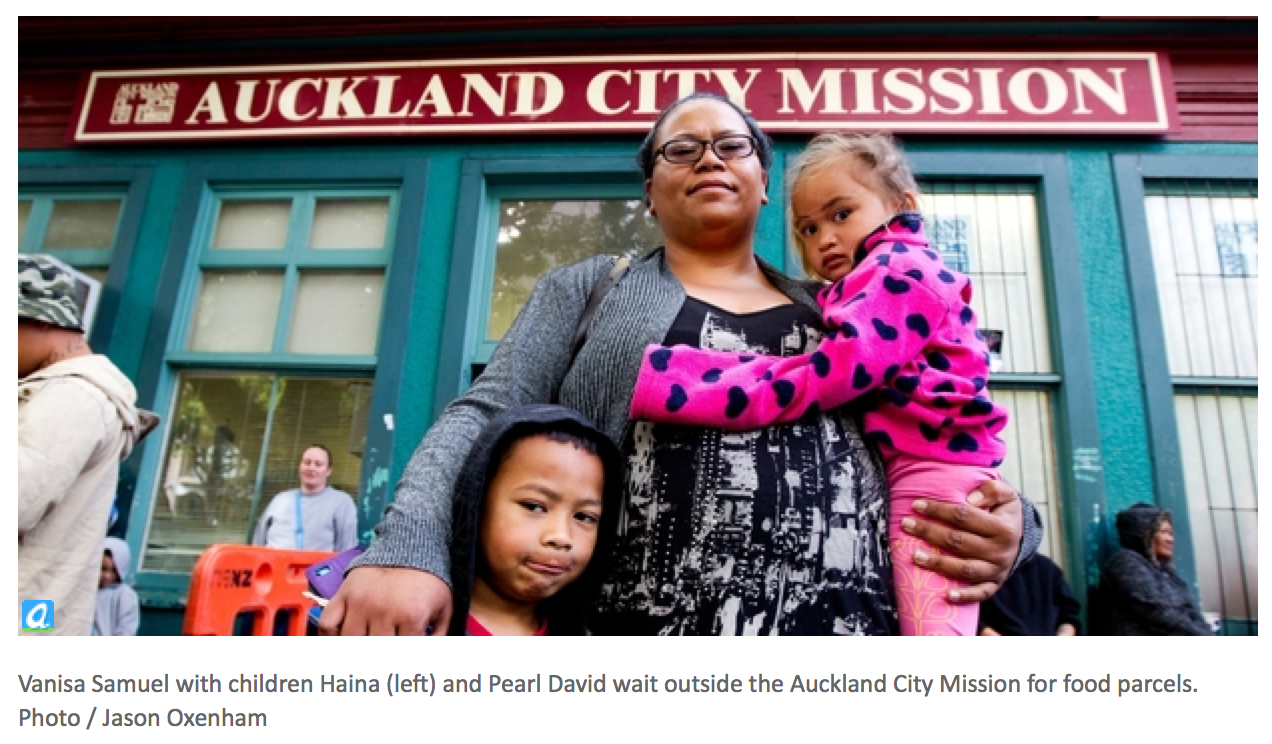
I was running, Hop card in my teeth, clutching my bag, pulling down my skirt and blinking away sweat. I was late. I was lost. And I'd forgotten to Google where Auckland City Mission actually was. But I needn't have worried. As I turned on to the corner of Hobson St, I froze. About 200 people were standing on the pavement.

It was the queue to get into the City Mission.

There was a TV3 guy in a sharp suit at the end of the line. He was trying to talk to people and was getting laughed at. I had to walk past him, and through the queue, to get to the door.

I've never felt younger, greener ... no, whiter, and more middle class than I did at that moment.

Inside, people were squashed into every corner. People sat hunched, elbows on knees, staring at me, or at the wall, or at the clock.

At my feet, a baby girl with dark curls wriggled around like a caterpillar.

I looked at her. Then I looked at my feet. I was wearing new trainers. I'd bought them yesterday. $180. A Christmas present to myself. White, high-heeled Nikes. They glistened like pig fat under the neon lights.

Eventually, when a bead of sweat had dribbled the full length of my spine, I got shown into Diane's office.

Diane Robertson, CEO of the Auckland City Mission, looked busy. She had one food parcel to distribute every eight minutes. She waved away my feeble small talk about the heat, pulled out the Family 100 Report on poverty in New Zealand, and talked for the next hour about the hideously intricate web of poverty.

I left. My stomach was tied in fierce knots at my own privilege, the injustice of the situation and the fact that some people had queued since 3am. There was still a queue at midday. They were waiting for a box of Weetbix, sausages and toilet paper.

Later that evening, I was in a funky Takapuna bistro for my girlfriend's birthday. It was one of those places where everything comes with an artistic olive. It was one of those places I felt comfortable walking into. One of those places I could wear the white trainers in.

It was also the place where I'd had one of my most heated dinner conversations ever. A guy had been telling me that we shouldn't have free breakfast in schools. Apparently parents who sent their kids to school without breakfast were irresponsible. If we gave them Weetbix, it'd only encourage this bad parenting.

The idea that poor people are bad parents is one of the ideas I heard a lot at school. It normally came alongside something like, "God, they just laze around, sponging off the government, living off benefits ... they don't even want a job."

There is prejudice and loathing, and then there are facts. The Family 100 Project, an online report compiled by Auckland Council, Auckland City Mission and Think Place, brings the truth of what's actually happening in the homes of the underclass.
You'll read, in story after story, about parents who don't eat so that their kids can. Parents who don't sleep in a bed so their kids can. Parents who will get up at 3am to queue, go through a five-hour ordeal of form filling, waiting, explaining, waiting, explaining again and waiting again ... just to get a box of Weetbix and sausages so their kids can eat at Christmas.

They don't sound like bad parents. They sound like heroes.

And when you read The Family 100 Project, you'll see there is a section on employment. You can read the interviews where people rhapsodise about working.

They want to work; it's a ticket out of poverty. It's a way to meet new people. It's a way to buy dinner every night of the week. And it's a self- confidence boost.

They don't sound like spongers. They sound willing, no, desperate to work.

And you can see the web of agencies that people living with poverty deal with in a fortnight. It's well over 20. Families must traipse from agency to agency, continually proving how they're 'legitimately poor'. I can't imagine what that's like. But it sounds like they work flat out to live.

We can do something about it. We can change the way we talk about poverty. We can donate to Auckland City Mission's 'Be Someone's Angel' campaign. Or we can think better of buying $180 trainers and buy two food boxes for a family instead.

I'm not sure I want these shoes now anyway. I thought they were a sparkly white. On closer inspection, I think they're a foul yellow.

Tuesday, February 26, 2013

THE RACE TO NOWHERE


I was fortunate to attend the ICOT13 conference in Wellington recently.  This was a fascinating 5 day conference to expand global thinking around the themes of ‘future survival‘, ‘personal futures‘ and ‘future society‘. During the conference I attended a workshop presented by Ron Ritchhart on 'Enlisting Parents as Allies: Working Together to Develop Powerful Thinkers and Learners.'  As many of the teams I work with find it challenging to engage and enlist parents, this workshop seemed like an excellent choice and I wasn't disappointed.  


Ron spoke of creating  'Culture's of Thinking, creating place where thinking is valued, visible and actively promoted.'  With parents focus often being on their child 'being school ready', how do we as teachers broaden their view so that they think about "what do we want children to be like as adults?"  We need them to know that this is about thinking about all children not their specific child, all children in our community. He said that when he has asked parents this they tend to come up with a huge list of dispositions, not skills and knowledge.  

He also shared how parents often worry that when you focus on dispositions that something is missing out, left behind, but we need to share that we are not leaving anything behind, we are lifting the bar!  We need to find ways for parents to understand that dispositions can't be directly taught, they are learnt over time, children grow into the intellectual life around them, so they need to ask themselves "what life are we surrounding children with?"

How do we talk to parents?  How do you structure the talk to them?  Ron suggested that we make links to a research base, as it gives parents ideas of where these ideas come from enabling them to investigate it further if they want to.  That we need to provide a rational for change from the status quo.  We also need to help connect parents to familiar experiences or context to get parents to see where education is going, share that we are lifting the bar!  Unpack the core practices with rich examples and get parents to engage in conversations, don't talk too long before you engage them in discussion!  Finally he suggested that we need to provide specific things parents can do and actions they can take at home.  Talk with parents about working TOGETHER.  How together, we can develop powerful thinkers and learners.  It's taking it further than just saying “this is what we do here”, it also saying “here is what you too can do at home.”

I'll leave you with four shifts on the way we educate to actively promote thinking that Ron shared...

1, Shifting instruction from the delivery of content to engagement.
2, Shifting the focus of curriculum from skills and knowledge to develop understanding.
3, Shifting the approach to curriculum from superficial coverage to depth of exploration.
4, Shifting the process of learning from memorisation to thinking.
These are the shifts for parents to look out for as a setting is on this journey, when all are happening then their setting as managed the change!

Watch the video clip from the link below about the Race to Nowhere, it's a good clip to share with parents to get THEM thinking! 

http://www.racetonowhere.com/thanks#prettyPhoto/0/

Arohanui 
Gillian