Tuesday, May 30, 2017

Update on progress of programme starting in Shenzhen

Update on the progress since last year at the Shenzhen Experimental Kindergarten, China

2017 provided yet another opportunity for me to spend time working with the teachers in China. The first stop of this trip was Shenzhen. This is a quite fabulous early childhood setting with a tremendous drive to provide fabulous learning experiences for their 250 children!

When I first arrived at the Kindergarten, Rainy took us on a tour of the kindergarten to share some of the progress since my last visit. In particular she shared the work of Learning Stories and Portfolios. All the classrooms have set up areas for portfolios and couches to sit on and read the portfolios. The work that has been done is extremely impressive. Throughout the week I had an opportunity to learn more about the progress they have made with their work on Learning Stories

Rainy sharing the work that teachers have done on Learning Stories and their Portfolios.

This visit to Shenzhen included a conference that built on the last week long conference around Te Whāriki and Learning Stories.
Wendy and Zhou Jing (translator), also known as Jane.


Wendy and Zhou Jing (translator) redefine "PLAY " and the value of play to the teachers.

Teachers are engaged and curious, keen to explore these ideas and consider how they might become a part of their practice!
Raising issues about the notion of children are constantly exploring and discovering the world around them by playing. Encouraging teachers to pay attention to and support the children in their play. To give children agency as they choose the focus of their learning. I talked about the importance of providing a safe, rich environment, and the importance of children having plenty of time to explore. We also discussed a wide range of issues including: the importance of teachers listening deeply to children, in an effort to really discover the child's interest or passion, to  find the child's WOW moment and to record this in a Learning Story.
Teachers express their enthusiasm for this work and the implications for their teaching practice.


Environment Creation
 
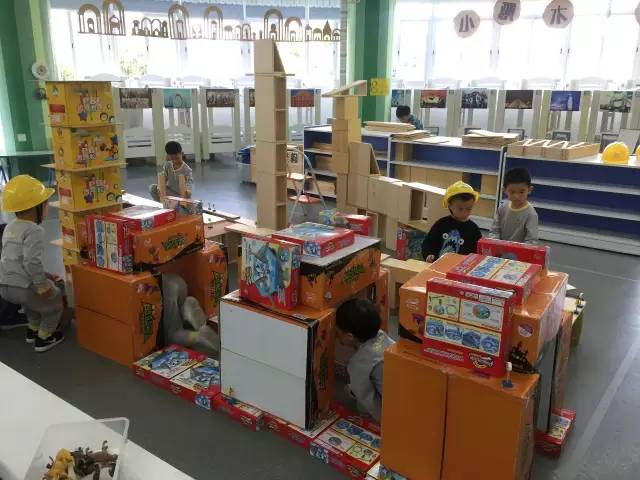
The following photos give a sense of the environments that are being developed in the kindergartens to provide a wide range of affordances for the children and their learning. Shenzhen Experimental Kindergarten teams are shifting their thinking, so that children choose, explore, operate, through the material, environment, peer interaction to promote children holistic development!


Shenzhen Experimental Kindergarten 26th Pioneer Technology Festival Opening

While I was at the kindergarten, they held the opening of the Technology Programme. They asked me to officially open the event. This was for me quite an extraordinary event quite different from anything that I would experience in New Zealand. There are two very strong parent clubs at the Shenzhen kindergartens, one for fathers and another for mothers. The parents are deeply engaged in the life of the kindergarten. For this Technology Festival they were key participants in this very special production….

The Technology Festival was held in both the Shenzhen Kindergartens, these are images from the opening of the Festival.

An exploration of the robot!
Older children join the younger children as they explore some of the technologies.
A range of technology is on display for the children to play with.
Children contribute to the programme.
Parents also contribute to the programme. This is a mother singing a song from 'Frozen'.
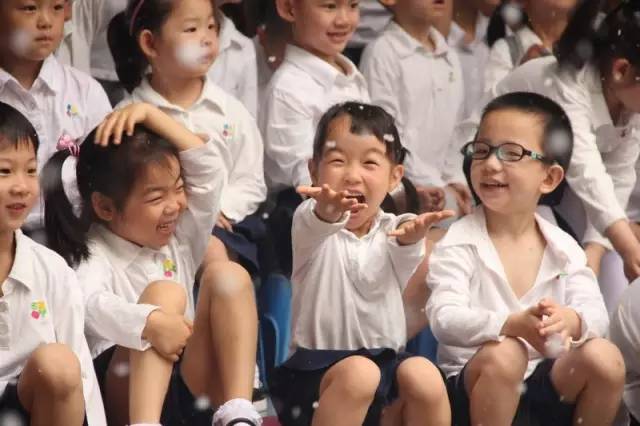
Much to the delight of the children, snow fell during the performance by the mother.
Fathers also contributed to the performance!!
Teachers were also very much a part of this event!!
I spoke a little about the importance of technology as part of the opening.
Teachers contributing.
Children contributing.
And now the formal opening!!!
A celebration with all contributing.

Children participating in the festival.


Dehui Shuangxiu - Shenzhen experimental kindergarten "Wisdom College" was formally established
This is another development at Shenzhen Experimental Kindergarten. While I was in Shenzhen they were launching a new professional learning initiative called the Wisdom programme. I was invited to address the gathering and assist with the launch.

Wisdom Institute is initiated by the Shenzhen Experimental Kindergarten and set up a teacher training camp for teachers to provide opportunites for learning and practice, designed to cultivate freedom, innovation, content, and to support the hard work carried out by teachers. They were developing a space where anyone has the opportunity to express their personal ideas, fully agreeing that ideas can be respected, that there is no standard answer, there is no black or white right or wrong, in the space of the Wisdom College they are hoping that innovation and excellence will flourish.

Here are some images from the opening of the Wisdom College


Traditional growth file versus the Learning Story growth file
Shenzhen experimental kindergarten teachers,  have begun a new attempt to challenge the traditional growth of the file to "study the story" for children in the kindergarten to establish a happy file. There has been such wonderful progress with the notion of the Learning Story entering the lives of the children and their families at Shenzhen Kindergartens. Teachers are sharing stories and providing their own professional learning around Learning Stories. Our books have been translated into Chinese and provide an important foundation to the work. In particular the books they are using are:

Assessment in Early Childhood Setting: Learning Stories by Margaret Carr
Learning Stories: Constructing Learner Identity in Early Education by Margaret Carr and Wendy Lee
Learning in the Making: Disposition and Design in Early Education by Margaret Carr, Anne Smith, Judith Duncan, Carolyn Jones, Wendy Lee and Kate Marshall.

The books translated into Chinese.
Teachers sharing their work.
Teachers celebrating, they have been given a copy of our book on Learning Stories - Learning Stories: Constructing Learner identity in the early years.

Another opportunity for a photo!!


Wednesday, March 8, 2017

The impact of Neuroscience on our practice

What an absolute pleasure it was to have Neuroscience Educator; Nathan Wallis, join us in Hamilton to present a seminar: The impact of Neuroscience on our practice.  This was a Ministry of Education sponsored seminar, organised by ELP.

An extremely informative presentation covering many vital topics of neuroscience and child development. 
Some of the key concepts Nathan covered were:  
-  The four parts of the brain, and their role in learning – neurosequential development
-  The importance of the first 1000 days
-  The dyad relationship
-  Social/emotional learning
-  Reinforcement of dispositional learning
-  Risk and protective factors

Here is a sample of some of the feedback we received from the participating ECE teachers; covering what new insights/useful strategies etc. they gained from this seminar; and how it will impact/change their practice.

“Importance of the dyad. 4 areas of the brain. Fundamental importance of the first 1000 days.”

“The key importance of relationships in the first three years for brain development”
“Looking at how our team works - using key teacher practice correctly rather than sticking to rosters. Understanding the brain and what needs to happen to support healthy brain development.  Realizing that the brain is moulded by the environment and the implications of this on our children.”

“Understanding the ‘calmness’ approach to learning. Going back to the basics of human relationships.”

“The children in our centre need love and encouragement for their interests to show. This will then help us plan for interests. The new information reminds me to remember what brain they are in to help them develop. Also helps re-think our rosters and mat times.”

“The importance of neuroscience knowledge in ECE. The importance of the first 1000 days – Wow! So very interesting and informative.

“I have a better understanding of how our two year old children find it difficult to be part of a programme set up for 3 and 4 years old. To develop a way for our two year olds to have more of a relationship with one teacher. I will share this information with other teachers and parents. I will consider more where the two year old children fit in our programme.”

“I will continue to practice with respect and by building strong dyadic relationships with my primary care children. I have always believed that they are important but I do have a better understanding of why.”

“By documenting with my educators about planning for children where they are at, not where I think they should be.”

“Doing further research and reviewing dyad relationships.”

“Reinforced a lot of what I already know. Reinforced not to ‘push’ cognitive learning in the early years even though that is often what parents ask for especially around age 4½.”

“I have gained more knowledge about what children actually need rather than preparing them for the next stage. This will support my evaluation and curriculum documentation as I will be able to look at what children need now to inform how we provide the curriculum.”


“It will enable me to write [learning stories] with more assurance about the importance of dispositional learning and enable me to disseminate current research to both colleagues and parents.”


If you would like more information on these research findings, please follow this link to resources that will provide more information and detail on these topics.

Monday, February 20, 2017

Exciting News!

--> This is very exciting news. The following three New Zealand books have been translated into Chinese, they are: 

1.Assessment in early Childhood Settings: Learning Stories by Margaret Carr

2.Learning Stories: Constructing Learner Identities in Early Education by Margaret Carr and Wendy Lee

3.Learning in the Making: Disposition and Design in Early Education by Margaret Carr, Anne Smith, Judith Duncan,Wendy Lee, Carolyn Jones and Kate Marshall 

Learning in the Making has made the Chinese list of the top 100 books that are influencing teachers in 2016. This list was initiated by the Chinese Education News Network, and the Chinese Education Press Agency is the supervising board of this network. 

The list was decided based on readers' feedback, major educational book publishers’ recommendations and a group of expert judges’ opinions. 

There are 6 catagories of the books:  educational theories, educational psychology, teachers’ professional development, early childhood education, general education, and culture. 

“Learning in the making” is one of books chosen under the early childhood educational books category. It is one of only 9 early childhood books that made the list and it rates number 52 on the list of 100.


All of the chosen books were published in 2016, and they are regarded as high quality books and have good influences on teachers.


Wednesday, February 15, 2017

I Have Been Reading........ Kathryn Delany


Ruta McKenzie shared this important quote with us, “The culture of the child cannot enter the classroom until it has entered the consciousness of the teacher” (Samoan saying).
This quote makes me wonder: How does the culture of a child and their family and whānau enter my consciousness? I think people, books, reading and practicing new things have been a large part of my bi- cultural journey.
So... having put my hand up to review some books  I was left thinking what books have been most important to me on my journey towards bi- culturalism?
And there are many. Both books for adults and children have been part of this journey for me. Thinking of the notion of this Early Childhood Education setting as being a place of learning and teaching I have taken many opportunities in reading books and using resources with children that have enhanced my use of Te reo Māori, ngaTikanga Māori and understanding of Te Ao Māori.
We have a list of great books on the ELP Website’s resource section with small reviews and guidelines about each book’s content (http://elp.co.nz/Educational LeadershipProject_Resources_Books_Maori.php).
It was very hard to select one or two books but here goes: 


My favorite book and one that I consider essential to all teachers is Te Wheke by Dr Rangimarie Turuki Pere CBE. Dr Pere shares her wisdom and understanding in every word. It has been a read that supports the culture of the child to enter my consciousness. Even if you have read this book already I recommend keeping it at hand and dipping into occasionally.
This book is especially useful if you use the concepts (chapters) for pedagogical discussion topics to grow bi- cultural teaching and learning practices.
Choose one concept (e.g. Aroha, Mauri etc.), read it as a team and then have a discussion framed up by “What are the implications for my/our practice here?” 


In the Beginning by Peter Gossage is my next choice. It offers learning opportunities to adults and children alike.
In this delightfully illustrated and written book Peter Gossage introduces us to the creation story. To Papat
ūānuku and Ranginui and their children. The illustrations are vivid and the text flowing and brief.
I hope you enjoy some rich exciting reading experiences that provokes and inspires us to support all children’s whakapapa and funds of knowledge and to draw in to our consciousness their culture.