Friday, May 27, 2016

Films produced by Anne Smith made available as a tribute to her work


With the permission of Anne's family the  University of Otago has made available 4  films produced by Anne Smith. These can be downloaded. The films were made between 1979 and 1993 and concern political and pedagogical issues for early childhood care and education at the time. They were very influential and widely used in early childhood training and teacher education institutions at the time and across  various  education studies and women's studies in university programmes.

Blue for a Girl
https://unitube.otago.ac.nz/view?m=zQp18JD5p9x

Can't Afford to be Casual about Childcare
https://unitube.otago.ac.nz/view?m=EhyF8JEXjbB

Early Childhood Educare: the search for quality
https://unitube.otago.ac.nz/view?m=1cxL8JFEiTk

Dunedin Family Daycare Project
https://unitube.otago.ac.nz/view?m=EbUr8JHmF06

Emeritus Professor Anne Smith remembered

It is with much sadness that we acknowledge the death of Emeritus Professor Anne Smith. Anne has been such a powerful advocate of ECE for more than forty years. Anne was at the forefront of the development of Childcare in NZ and has contributed enormously on so many levels to building a strong Early Childhood Service in this country. Below is a wonderful tribute written by Professor Helen May... this tribute is also accessible via the University of Otago website.

Tuesday, 24 May 2016
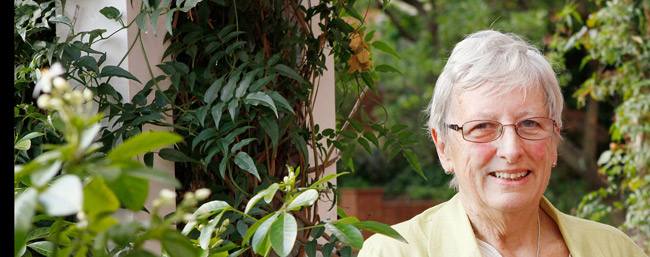
Anne-Smith-image
Emeritus Professor Anne Smith. Photo: Sharron Bennett.

Otago Professor Helen May pays tribute to a great friend, great scholar and great advocate for the rights of women and children, Anne B. Smith.

The University of Otago Emeritus Professor of Education and Childhood Studies, and Fellow of the Royal Society of New Zealand, died recently.

Professor May says Anne arrived back in New Zealand in late 1974, with her husband John and two pre-school-aged children, appointed to the University as a lecturer in education, in the field of human development. She had been awarded an Izaak Walten Killam Memorial Fellowship to study at the University of Alberta, where she had obtained her doctorate, as had John.

Thus began a whirlwind career and an adventurous journey over more than four decades, using the resources of academia, through research, writing, presentation, conferencing, film making and travel, to present the research and policy arguments for quality child care, and more broadly for quality early childhood.

This was a journey played out on many fronts. Firstly, within the university, where career advancement for women and particularly women with children was a rocky road. Anne was part of small group of feminist women academics that challenged the pervasive patriarchy of university employment practices.

Secondly, on the local front, Anne was part of the Dunedin Women’s Collective that got funding through the 1975 International Women’s Year fund to establish a childcare centre that demonstrated in its practice, how quality for children and support for women could be realised.

These were heady days that spilled onto national political fronts linking early childhood education and women’s rights. Anne became and remained a figure of national renown: advising, chairing, and working with multiple government agencies on various taskforces, think tanks, committees and working groups.

Back in the mid-1970s Anne was the first academic in New Zealand to actively support the idea that quality childcare could be a good thing for children and families.
She became involved in the advocacy work of the NZ Association of Child Care Centres (now named Te Rito Maioho Early Childhood NZ), undertaking leading work around qualifications for staff working in childcare and, through her research, challenging older myths of maternal deprivation to promote new understandings of the components of quality childcare.

Anne’s advocacy work for early childhood was always grounded in research, a field in which she gained both national and international recognition. Her book Understanding Children went through many editions and has been a standard text for so many New Zealand students of education and teaching.

In 1995, Anne was appointed the foundation Professor and Director of the Children’s Issues Centre. This opened another front as a leading advocate for children’s rights; posing new research questions and confronting key issues for children, including New Zealand’s ‘anti smacking’ legislation. Anne’s stage was truly international, and with colleagues from the Children’s Issues Centre and other like centres of scholarship, the new discipline of Childhood Studies was founded.

Late last year, Anne received the unexpected news that she had an aggressive form of cancer. She actually felt in fine health at the time. Having reached the age of 75 years, she had been delighted to have gained a free ski pass for the Central Otago ski fields where the Smith family liked to gather with their grandchildren. While the prognosis was not good, treatments were possible. In the meantime, Anne hastened work on a number of writing projects, most important was completing her book Children’s Rights Towards Social Justice.

This was launched amidst a great gathering of friends and colleagues in Dunedin in April, and then in May at an even bigger gathering in Wellington, including more friends, Members of Parliament and leaders of organisations and government agencies associated with early education and children’s health, wellbeing and children’s rights.

Anne was also writing other chapters, papers and articles during the past few months; the last being sent off a couple of days before she entered hospital. This was an unexpected and massive set back. Only earlier in the week Anne was cheerfully planning other tasks and we had hoped to meet up over the weekend for tea/coffee and pikelets. Instead, last Saturday at Dunedin Hospital we said goodbye amidst some still lively talk about early childhood education politics, the latest books we were reading, computer technology and family news.

Earlier in the year, Carmen Dalli and Anne Meade, with Anne’s permission, began work on a book to be published later this year by NZCER Press with chapters written by a few of Anne’s colleagues: Research, Policy and Advocacy in the Early Years A book inspired by the achievements of Professor Anne B Smith, a pioneer of evidence-based policy and practice in New Zealand.

My own chapter entitled the ‘Early Adventures of Anne’ tells the story of Anne’s first year at the University of Otago in 1975, and its aftermath. It is based mainly on an earlier interview with Anne where she describes the politics and prejudices around childcare at the time, and the campaigns that followed. In our last conversation together I was clarifying some of the interview content. Anne’s comment was ‘Well I did say it!’ And so she did.

Thursday, April 21, 2016

LEARNING STORIES IN THE USA!

Margaret Carr, Annie White and Wendy Lee

How wonderful it has been to have Annie White with us over the last few days. Annie is an Assistant Professor of Early Childhood Studies, at California State University, Channel Islands.  It has also been a pleasure to host her husband Jim as well. Annie is passionate about ‘Learning Stories’ and has participated in three Study Tours in New Zealand with Margie Carter, which was hosted by NZ Inspire early childhood educators in Auckland. During her stay, she has been interviewing teachers, leaders, academics etc about the use of Learning Stories in New Zealand.


In California, all State funded programmes are required to use a children's assessment tool referred to as the Desired Results Developmental Profile (DRDP).  This tool was developed by University of California, Berkeley and WestED, research institute.  This is a very challenging tool to use and has the potential to stop any teacher in their tracks with the density of the observation requirements.  Finding a pathway to meet these requirements and keep teachers connected to children’s learning lives has been a huge challenge for Annie. When Annie came to NZ, and listened to our voices and witnessed the practice, she knew that there had to be another way that Head Start and California could approach children's assessments.


After learning about the practice and philosophy of Learning Stories she returned home from NZ with a deep passion and a tenacious drive to incorporate learning stories in the Head Start programme, where she has worked with for the past 18 years. They have now been using Learning Stories for the past four years. 


This led her to her dissertation study, "Engaging Families in School Readiness: Creating New Pathways for Dialogue".  She used Learning Stories as the basis for her research to investigate teacher and parent collaboration and family engagement.  Annie also worked with Early Head Start program (birth to three years of age) to use Learning Stories (they called them "Journey of Discoveries") in collaboration with parents/families.  Her research was a qualitative case study through the University of California, Davis and Sonoma State University.  Her findings have been well received and she has presented at the California Department of Education, Early Education Support Division, to demonstrate how learning stories can be used in conjunction with the DRDP tool.  Recently, she has presented locally, Statewide and Nationally on her research.  There is an incredible interest in Learning Stories.  Annie recently received a Simms/Mann Fellowship and will be conducting a year-long project using Learning Stories with two homeless shelters that have child care centres.  Annie’s University students will also be supporting the teachers in the homeless centres, as peer mentors, to support parent to complete Learning Stories.


Annie was recently hired by California State University, Channel Islands to support their existing work using Learning Stories in the early childhood study courses.  Learning Stories have been used as part of the curriculum and assessment courses for several years.  Teachers who are placed in classrooms for student teaching, use Learning Stories for children's assessments, to assess the centres, and for their own assessment for learning. 


Annie continues to teach, explore and research Learning Stories as she searches for meaningful and authentic ways to assess children’s learning.

Monday, November 16, 2015

On Celebrating Learning Stories - Conference Oct2015


The Learning Story Conference has been a stalwart of the Educational Leadership Project since the year 2000. Each year teachers come together from throughout New Zealand and share stories. What is refreshing about this, is that every story is different. And thus, every Learning Story Conference offers new insights, fresh ideas, and stimulating pedagogical discussion.

2015 was no exception. As Wendy Lee enthused, it is, as usual, encouraging and inspiring to see teachers face their fears, and stand up and share their stories, philosophies, successes and challenges with fellow colleagues. At times we saw the nerves, presenters shared their anxieties, as new and experience presenters began their presentations. But what excitement! as these leaders, reached deep, expressed their passions, relaxed and became animated as they began to enjoy the conversations that evolved from their personal and professional shared experiences.

At the end of an incredible conference, Wendy Lee thanked presenters, and encouraged new presenters by quoting “You have to be brave so that others can be brave”. And that is certainly what I witnessed throughout the day.

The Learning Stories shared worked together to clearly represent and encourage learner identity. These are treasured stories that children claim as their own, interacting with their portfolio, and passionately sharing their learning with friends and family. Examples were shared about learning Stories and portfolios connecting children with events through time, and with whanau - clinging onto their books with a deep sense of belonging.

Margaret Carr brought us back to the essence of the story. When Margaret first researched narrative stories, it was just the beginning of what has become a rich assessment process, not only documenting children’s learning, but developing learner identity and influencing children’s long term image of themselves as competent and confident learners. Margaret reminded us of the element of uncertainty - about what came before and the direction the learning will take - between stories. We were encouraged to continue to embrace the value, and grow the continuity, of learning stories, to celebrate the connections between time, places and relationships.

Wendy Lee explored the development of e-portfolios and challenged us to remain true to the purpose of the learning stories’ socio-cultural perspective, and to remain true to our professionalism. The use of technology within ECE has always been a contentious one, however e-portfolios offer valuable connections. We need to be mindful not to become teach-technicians using quick and easy tech tools, which can distract us from digging deep and expressing what we know. We were encouraged in all manner of learning stories, to reflect and be mindful about how we weave our professional knowledge of assessment, using Te Whāriki into children’s stories of learning, in a way that is relevant and powerful. There is value in both the e-portfolio, and the paper portfolio, and we hugely beneficial to have both!!

I can’t wait for the next Learning Story Conference, and to hear about the tamariki and teachers’ courageous stories of learning.


Wednesday, September 2, 2015

Let the children play.

I was at a centre recently and we were discussing Learning Stories.  My question to this group of teachers was - what are your long term aspirations and goals for the children at the centre.  The teachers thought about this for a moment and replied - they would like the children to have empathy, to be socially competent, to have resilience and a surety about who they are.  I do think that there were a great deal more aspirations that these teachers had but in the moment that was their list.

After a bit of discussion about the aspirations we watched an interview with Sir Ken Robinson in which he was asked,  “What skills are essential for humanity to thrive in the modern world?”

Sir Ken Robinson has four areas that he thought we should grow in children - our long term aspirations for them.  These were the four area:

Creativity - which he described as the fruit of imagination.  I have heard others describe this also as divergent thinking.  Gansky  described divergent thinking as “the ability to branch out from a starting point and consider a variety of possible solutions, involves fluidity of thinking, broad scanning ability, and free association.”   

Compassion - Sir Ken Robinson says this comes from the same power as imagination.  It is being able to see things away from our immediate circumstances.   He calls it applied empathy and the cultural glue that holds us all together.

Composure - This he said is mindfulness.  He quoted recent statistics from the World Health Organisation that state in 2020 depression will be the biggest form of disability. He goes on to say that children need to feel whole.   Within ECE I think this about seeing the tamaiti as a whole person with spirituality, mana, a past, present and future who is rich in potential and ensuring that the tamaiti has the same understanding of themselves.  Maybe we would call this belonging - but belonging is very very big.  Small word big meaning. 

Collaboration - He said children need to learn to work together rather than as individuals.  Going into the future if children have learnt collaboration they will be facing common challenges together.  I can imagine that if children are sharing their ideas, thoughts and passions in a collaborative way when facing problems while they are young then when faced with new challenges in the future that they will have the multiple perspective and ideas available to them through this ability to collaborate.

The teachers from the centre had actually spoken about many of the skills essential for humanity listed by Sir Ken Robinson.   

It is always amazing to me that when you hear something for the first or second time then you start to notice and hear about it more.  It is a little like when you buy a car and all of a sudden you see that particular brand everywhere and you hadn’t noticed it before.  Well that feeling has happened to me over the last week - hearing those teachers speak, hearing Sir Ken Robinson’s interview and now today an article I found on the internet called, ‘The Decline of Play and Rise of Children’s Mental Disorders’.  In the article Peter Gray talks about the decline of play and the correlation between lack of time to play  and depression in older children.

Gray wrote, “Free play and exploration are, historically, the means by which children learn to:
solve their own problems
control their own lives
develop their own interests, 
and become competent in pursuit of their own interests.

Solve their own problems - creativity.
Control their own lives - composure.
Develop their own interests, and become competent in pursuit of their own interests - if you have seen they way children work together and share their passions and interests you would know there is a strong link to - compassion and collaboration.


If I were to ask how can we build creativity, composure, compassion and collaboration within the children we teach I wonder if we would all answer - ‘let the children play.’


This is a link to the article:  

Monday, August 24, 2015

Growing up....

More thoughts on 'what do you want to be when your grow up'.

I have recently listened to Sir Kin Robinson online - he was discussing what 21st Learners need to learn in preparation for their future.  This is something that we might share over the next few blogs.